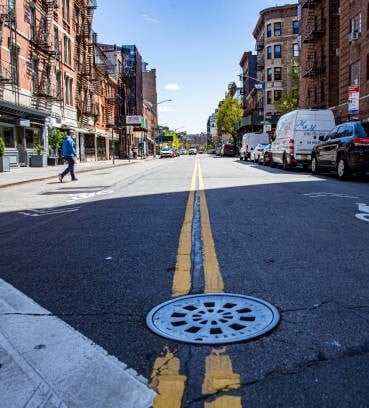

New York has shifted from reactive-response mode to a broad, long-term PFAS strategy that spans drinking water, private wells, soils, wastewater, biosolids, consumer products, and more. This page is designed for New York utilities, POTWs, industrial and commercial facilities, municipalities, property owners, and consumer brands that need to understand how PFAS regulations affect their testing and compliance obligations. For these groups, the state’s approach means more comprehensive testing, stricter cleanup expectations, and expanding product restrictions.

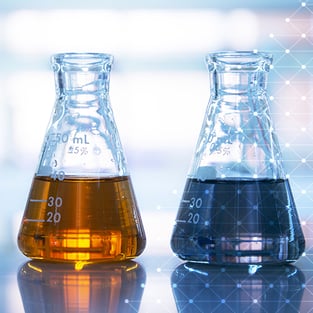

Pace® offers comprehensive, state-of-the-art PFAS testing in New York, combining advanced analytical methods with deep regulatory expertise to deliver fast, defensible results for drinking water, wastewater, soil, and other environmental matrices. With a robust network of certified laboratories, dedicated project management, and rigorous quality assurance, Pace® helps public agencies, utilities, and private clients meet evolving state and federal PFAS requirements while minimizing risk and maintaining compliance.
Yes, PFAS have been detected in some New York public drinking water systems, but levels vary by location and system. Several sources give New Yorkers insight into PFAS in public drinking water systems. The U.S. EPA’s Fifth Unregulated Contaminant Monitoring Rule (UCMR 5) required thousands of public water systems nationwide to test for 29 PFAS plus lithium between 2023 and 2025. The results are publicly available through the UCMR 5 data finder, which lets users drill down by state and then by individual water system.
New York State DEC also provides information on PFAS and 1,4-dioxane through its Division of Water PFAS information portal and related webpages, which summarize state monitoring, regulatory actions, and links to additional water-quality data for New York systems. Pace® collaborates with the New York State DEC as an approved contractor to support these monitoring and reporting efforts.


Rural areas of New York are impacted by PFAS. New York’s Rural Soil Background Study shows that PFAS are present even in remote, non-industrial parts of the state. PFOS was detected in more than 97% of surface soil samples collected from rural properties, and PFOA was detected in about 76.5% of samples. The study found no clear geographic clustering or patterns that would point to specific local sources, indicating that low-level PFAS contamination is widespread across rural landscapes rather than limited to heavily developed or industrial areas.
You should consider having your private well tested if there are known or suspected contamination sources nearby, such as industrial sites, firefighting foam use, or landfills. If in doubt, private well owners can use the UCMR 5 data finder and the New York Division of Water PFAS information portal to determine the prevalence of PFAS in drinking water in their area. If PFAS has been detected in nearby public water systems, it is likely to be found in local private wells, as they often use the same or connected source waters.
New York does not currently regulate PFAS in private wells, but state agencies advise using public drinking water standards as a health-based benchmark and encourage owners to test periodically for common contaminants and PFAS to determine whether treatment or an alternate water source is needed. If enacted, recent proposals to provide grants or rebates for PFAS treatment may require documented test results showing PFAS above specified thresholds in the private well.


Elevated Levels of PFAS in drinking water are typically treated using advanced treatment technologies that remove PFAS from the water before it reaches consumers. The main options identified by the U.S. EPA as best available technologies (BAT) are granular activated carbon (GAC), anion-exchange resins, and high-pressure membrane systems such as reverse osmosis or nanofiltration. These processes adsorb or collect PFAS so utilities or homeowners can meet health-based standards.
New York Law §37-0121 defines PFAS as “a class of fluorinated organic chemicals containing at least one fully fluorinated carbon atom.”
This definition aligns with the broad, structure-based definition used in other New York provisions that reference PFAS.

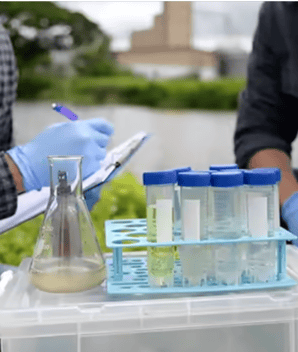
By measuring the total amount of organically bound fluorine in a sample, TOF analysis tells you whether a product likely contains fluorinated chemicals, including PFAS, and at roughly what concentration. Because all PFAS contain at least one carbon-fluorine bond, TOF results can flag products or materials that may warrant more detailed, compound-specific PFAS analysis or supply-chain review.


TOF analysis has a couple of critical limitations as an indicator of PFAS content in a product:
TOF does not identify which PFAS (or other organic fluorinated chemicals) are present or quantify individual PFAS.
TOF results can also be influenced by non-PFAS compounds, such as certain pharmaceuticals or other fluorinated additives, so a high TOF result does not automatically mean PFAS are present.
TOF methods also tend to have higher detection limits (often at the ppm level) than targeted LC-MS/MS PFAS methods, making them less suitable for demonstrating compliance with low-level regulatory limits and better suited as a screening or complementary tool.